comparison
Video Diary vs Vlog: The Difference Is Who It Is For
Compare a video diary and a vlog by audience, privacy, editing, consent, feedback, storage, and monetization before you press record.
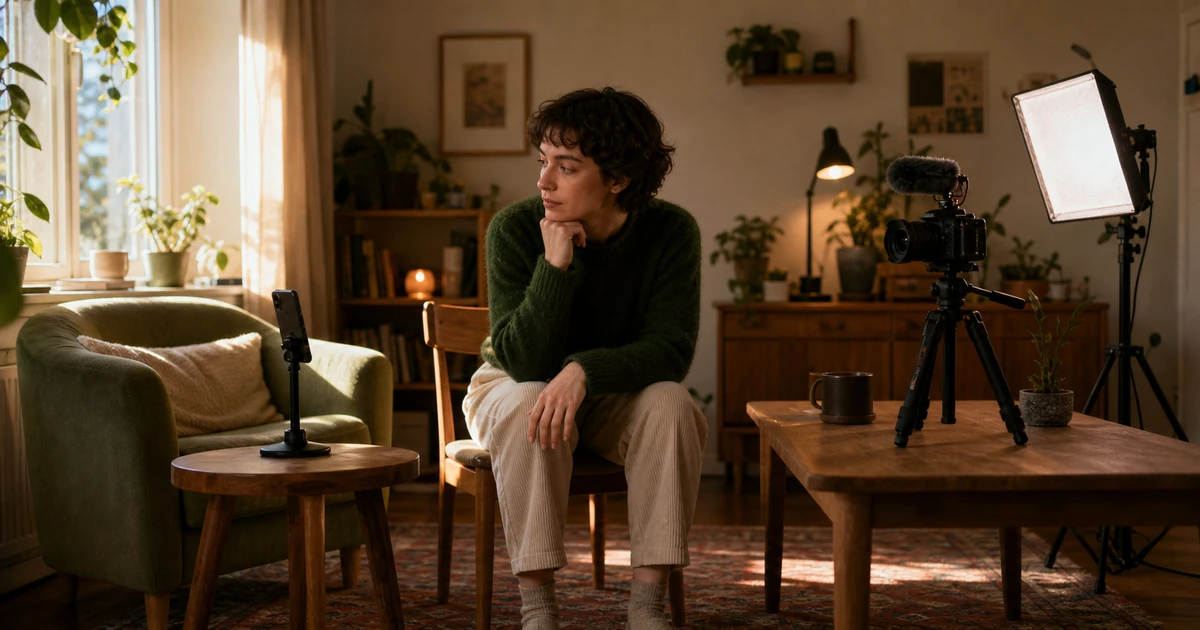
A video diary records your thoughts, feelings, or experiences over time and can stay private. A vlog is a video blog published on the internet. The camera might be identical. The practical difference is who the recording is for and where it will go.
That choice affects how much context you give, whether you edit, whose permission you need, which details you remove, and whether comments or performance numbers become part of the experience. A private clip can later become a vlog, but publishing it changes the job of the recording.
The terms overlap in everyday use. Someone might call a private day-in-the-life recording a "personal vlog," while an edited diary may eventually be released. Production quality is a poor boundary. Decide instead whether you are keeping the recording as a personal record or publishing it for an audience.
Video diary vs vlog: the difference in one table
The current Cambridge definition of a video diary focuses on regularly recording thoughts, feelings, or events over time. It does not require publication. Cambridge's definition of a vlog adds the missing condition: it is filmed and published on the internet.
From that boundary, the practical differences follow.
| Decision | Video diary | Vlog |
|---|---|---|
| Main job | Keep a record for yourself or a small chosen group | Publish a video blog for an online audience |
| Intended viewer | Often your future self | People outside the original moment, even if the audience starts at zero |
| Distribution | Can remain in a private journal or controlled archive | Lives on an internet publishing platform and may be surfaced to viewers |
| Performance pressure | No viewer response has to shape the entry | Views, retention, comments, subscribers, or revenue may influence choices |
| Editing | Optional; useful for removing sensitive details or making review easier | Optional; useful when an outside viewer needs context or a clearer sequence |
| Feedback | Usually comes from rewatching or private conversation | May include comments, subscriptions, shares, and community discussion |
| Consent | Still matters when other people appear or can be heard | Needs a fresh check because publication expands exposure |
| Storage | Organized for personal access and later retrieval | Adds an online platform copy and usually keeps source footage somewhere else |
| Monetization | No commercial purpose is implied | May be monetized when the creator and platform qualify; it does not have to be |
| Authenticity | Can be raw or carefully selected | Can also be raw or carefully selected |
The table does not make "private" and "public" absolute. A diary can be shared with family. A vlog can be unlisted or restricted. The sharper question is whether the clip is being stored as a record or distributed as content.
Audience matters more than polish
A ring light does not turn a diary into a vlog. Neither does a jump cut, background music, or a thumbnail. Those are production choices.
You can make a carefully edited video diary because you enjoy shaping memories. You can also publish a one-take vlog with no title card and no attempt to look polished. The definitions separate the formats by publication, not by effort.
The intended viewer still changes how you record. A diary entry can begin halfway through a thought because future you already knows the names, the room, and what happened before the camera opened. An outside viewer may need an introduction, a usable sequence, and an explanation of why the moment matters.
This is where "authentic" becomes a poor test. A private recording can be self-conscious. A public vlog can be candid. Both involve choices about when to start, what to point the camera at, and what to leave out. Ask what the recording is for instead of trying to award one format the title of real life.
What changes when a private recording becomes a vlog
The same file can cross the boundary. You might record a trip for yourself, then decide that one part could help or entertain other people. Once you publish it, four things deserve another look.
The viewer no longer shares your context
Private recordings can rely on memory. Published videos need enough context for a stranger to follow without knowing everyone involved. That does not require a script, but it may require removing inside references or explaining the setting.
Distribution can outgrow the first audience you imagined
On YouTube, posts may appear on channel pages, homepages, subscription feeds, and the Shorts feed. Its audience guidance also divides viewers into new, casual, and regular groups so creators can plan content around who returns.
Those are YouTube mechanics rather than a universal rule for every site. They show why uploading is a meaningful step: the recording enters a system built to help viewers find and respond to content. "I only have twelve subscribers" does not restore the assumptions of a private archive.
Other people need a fresh consent check
A person who was comfortable appearing in your private memory did not necessarily agree to appear online. YouTube's privacy guidance tells uploaders to get permission before filming other people or posting their personal information.
Ask before recording when you can. Ask again before publishing if the original agreement was private. Check voices in the background, addresses, school or workplace details, screens, documents, and stories that identify someone who never appears on camera.
Numbers can turn a record into a performance
YouTube offers creators measures such as views, audience retention, engagement, shares, and revenue-related data in its analytics metrics. Those measures can be useful when the goal is to reach people. They can also make a personal record feel like a piece of work being graded.
You do not have to optimize a vlog, and publishing does not guarantee an audience. The feedback loop simply becomes available. If seeing performance numbers would change what you are willing to say, keep the raw entry private and make a separate public version.
Pick the format by the job you need
Choose a video diary when you want to:
- remember how a period of life looked and sounded;
- speak without explaining every person or reference;
- keep unfinished thoughts that do not need a clean ending;
- review the recording later without inviting a response;
- separate reflection from an online identity.
Choose a vlog when you want to:
- tell a story to people who were not there;
- share experience, information, or a point of view online;
- build an ongoing conversation with viewers;
- learn from audience response;
- optionally connect the work to a channel, project, or business.
Monetization is possible on some platforms, but it is not part of the basic definition. YouTube's current earning guidance makes access conditional on platform eligibility and policies. A vlog with no revenue is still a vlog.
If both jobs matter, make two versions. Keep the original entry in the private archive. Export or recreate only the part that serves an audience, then remove details that belonged to the private context. This is cleaner than making one recording carry two incompatible promises.
Decide which one you are making before you press record
You do not need a content strategy for a diary entry. You do need a destination.
Before recording, answer four questions:
- Who is allowed to watch this?
- Where will the file live after I stop recording?
- Is anyone else visible, audible, or identifiable?
- Would I say the same thing if a stranger found it?
If the answer to the last question is no, that is not a flaw. It means you are making a private record. Use a workflow that respects that answer.
If you are making a vlog, decide what the viewer needs and what they do not need. Context can help the story. A street sign outside your home probably does not. Editing is valuable here because it gives you a second chance to separate relevant detail from accidental exposure.
For a first private recording, the guide to starting a video journal keeps the setup small. Before saving anything sensitive, use the video-diary privacy checklist to check device access, cloud settings, copies, and analytics.
Where Vidiary fits
Vidiary sits on the private video-diary side of this comparison. The iPhone app is built around recording an entry, optionally naming it and adding mood tags, then returning to entries by date. Its current navigation has Today, Past, and Settings rather than a public profile or creator channel.
A source audit of the current app found no public feed, follower graph, journal-entry publishing action, comments, likes, view counts, audience retention, or creator dashboard. The onboarding language is explicit: it is made for you, not an audience.
Journal data uses your iCloud and CloudKit container. Vidiary also uses PostHog for product analytics and RevenueCat for subscriptions, so a private journal workflow should not be confused with an app that handles no other data. The distinction here is narrower: Vidiary does not turn entries into audience-facing content.
That makes Vidiary a fit when talking privately is the job. If you want to publish episodes, grow a channel, respond to viewers, or measure content performance, use a platform built for vlogging and keep the two archives separate.
Common questions about video diaries and vlogs
Can a video diary be public?
Yes. A video diary can be released later or shared with a chosen group. "Diary" describes the recurring personal record; it does not guarantee secrecy. Once you publish an entry online for an audience, it also starts doing the job of a vlog, so repeat the privacy and consent check first.
Can a vlog be private or unlisted?
A hosting platform may let you restrict visibility, and people sometimes call private recordings vlogs. Under the Cambridge definition, internet publication is part of the term. In practice, describe the actual access setting instead of relying on the label: private, shared with specific people, unlisted, or publicly discoverable.
Does a vlog have to be edited?
No. A vlog can be recorded in one take. Editing helps when an outside viewer needs context, when the sequence drags, or when private details need to be removed. A video diary can also be edited. Production style does not decide the label.
Is a video diary more authentic than a vlog?
Not automatically. A private audience may reduce pressure, but the camera can still make you choose or perform. A public creator can speak candidly too. Look at the intended viewer, the cuts, the omitted context, and the reason for recording rather than treating either label as proof of honesty.
Decide who the next recording is for before you make it. If the answer is future you, keep it in a private journal and let it remain unfinished. If the answer is an audience, give them the context they need and remove the context they do not. When a private spoken journal is the right job, see how Vidiary works or borrow a question from these one-minute video journal prompts.